
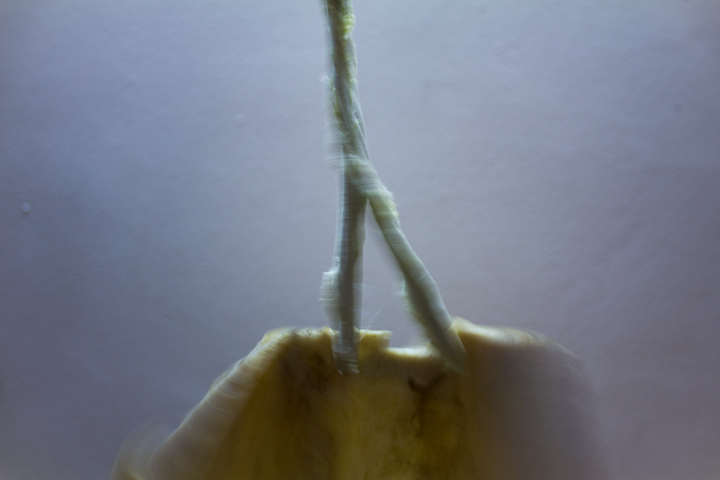
A bone hanging from a ragged strip of cloth spins in circles. Carvings on one side of the bone depict a cow and a man holding a staff and on the other side of the bone is a standing child. The bone comes from the shoulder blade of a deceased cow. When spun at a certain speed it forms a thaumatrope, the carvings on either side momentarily merging to form a single image of a cow, a man and his child.
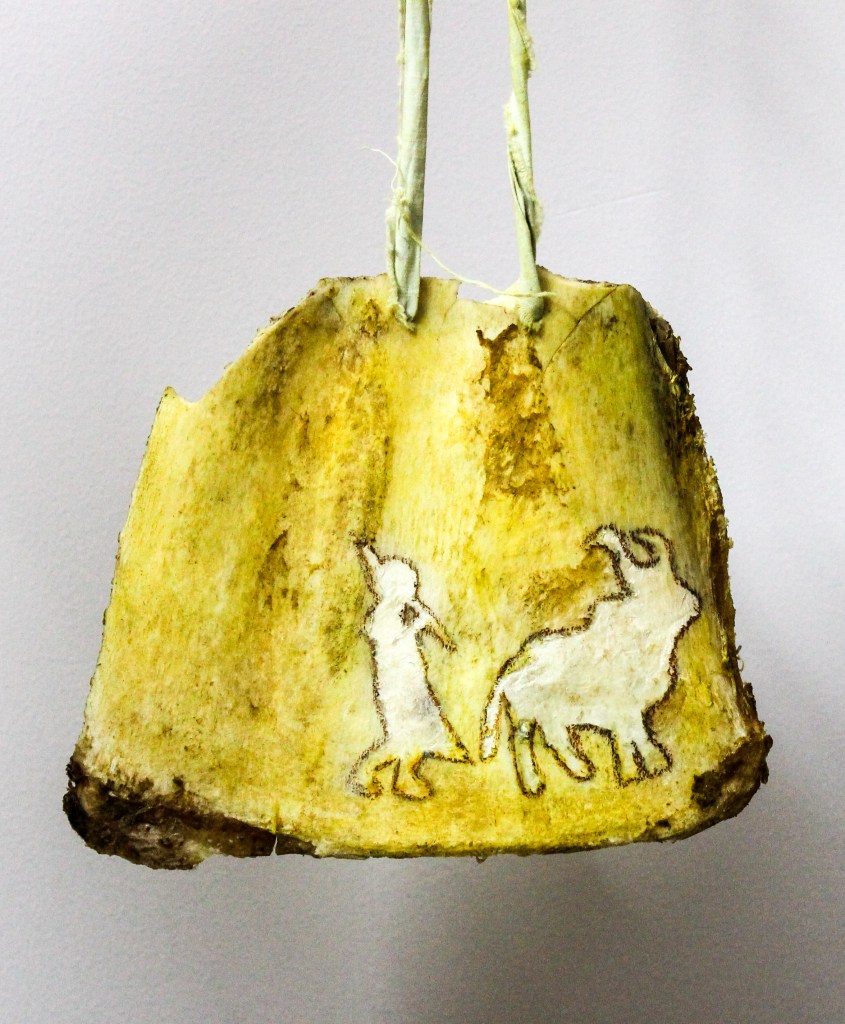
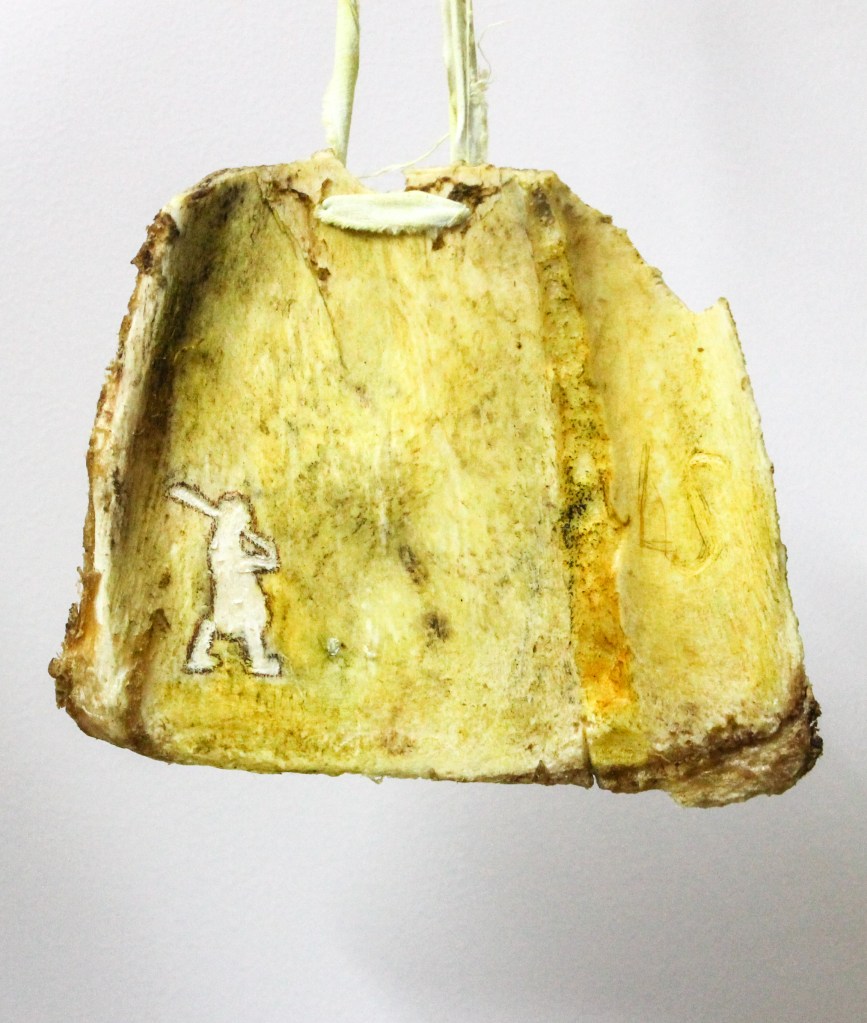
The image represents a nomadic tribe in Gujarat called the Jats of Kutch that are dependant on cattle rearing for sustenance. The artwork was developed in response to the Government’s strategic decision to classify large grasslands in Kutch as ‘wastelands’ in order to repurpose them for industrial use. These grasslands play a huge role in ensuring fodder security for livestock and space for them to graze freely.
The bone acts as a metaphor for the structure and support that the cow gives to the community. When the cow thrives, the tribesmen can ensure security and prosperity for their future generations. The spinning bone represents the passing of time bringing together the man and his child. As the bone slows, the image slowly flickers out of existence.
The crude nature of the bone made it difficult to select a material to suspend it with. Threads felt too delicate and metal or plastic wires were too unnatural in contrast. A turmeric stained cotton cloth complimented the strength and organic quality of the bone.
The Backbone of Kutch was developed as a Public Art Project and was projected on a building facade in a crowded Bangalore marketplace to generate awareness and incite conversation.

 Sashawhyy
Leave a comment